

A Checklist for Retirement Planning
It's never too early to plan for retirement. Use this step-by-step checklist to review your finances, max out savings, pay down debt & map your future income.


Many people assume retirement planning begins in their 60s.
In reality, some of the most important retirement decisions are made years—sometimes decades—before you stop working.
After more than 25 years helping retirees and pre-retirees navigate retirement income, taxes, investments, and estate planning, I’ve found that the individuals who retire with the most confidence are rarely the ones chasing the highest investment returns. More often, they are the people who started planning early and stayed organized along the way.
Whether you are five years away from retirement or simply want to make smarter financial decisions today, taking action early may give you more flexibility, more options, and potentially better long-term outcomes.
Why Early Retirement Planning Matters
Retirement is no longer just about replacing a paycheck.
Common Retirement Planning Challenges
- Increasing healthcare costs
- Inflation
- Tax-efficient withdrawal strategies
- Social Security timing decisions
- Required Minimum Distributions (RMDs)
- Estate and legacy planning
- Long-term care considerations
- Market volatility during retirement
The earlier you begin planning, the more opportunities you may have to prepare for these challenges strategically rather than reactively.
Step 1: Review Your Current Financial Situation
A strong retirement plan starts with understanding where you stand today.
Areas to Review Before Retirement
- Your income sources
- Monthly spending
- Savings and investment accounts
- Outstanding debts
- Insurance coverage
- Employer benefits
- Estate planning documents
Many people are surprised to discover gaps or inefficiencies once they organize everything in one place.
At Meritage Wealth Management, one of the first things we help clients do is simplify and organize their financial lives so they can make more informed decisions moving forward.
Step 2: Maximize Retirement Savings Opportunities
If your employer offers a retirement plan such as a 401(k), contributing consistently and taking advantage of any employer match can be one of the most effective ways to build long-term retirement savings.
2026 IRA Contribution Limits
- Individuals may contribute up to $7,500 annually to a Traditional IRA or Roth IRA
- Individuals age 50 or older may contribute an additional $1,100 catch-up contribution
Depending on your income and participation in employer retirement plans, Traditional IRA contributions may be tax deductible. Roth IRAs may provide future tax-free qualified withdrawals if certain requirements are met.
One of the most common mistakes I see is people waiting until their 50s to begin seriously evaluating how their retirement accounts will eventually be taxed.
A million dollars inside a traditional 401(k) is not the same as a million dollars in a bank account. Future taxes matter.
Step 3: Reduce High-Interest Debt Before Retirement
Approaching retirement with significant debt can place unnecessary pressure on your retirement income plan.
Debt to Prioritize Before Retirement
- Credit cards
- Personal loans
- High-interest debt
- Large outstanding balances
While every situation is different, many retirees find peace of mind knowing their monthly obligations are reduced before leaving the workforce.
Step 4: Understand Your Future Retirement Income Sources
One of the most important parts of retirement planning is understanding where your future income will come from and how each source may be taxed.
Common Retirement Income Sources
- Social Security
- Pensions
- IRAs and 401(k)s
- Roth IRAs
- Taxable investment accounts
- Rental income
- Business income
- Veterans benefits
Many people underestimate how complex retirement income planning can become once multiple income sources interact with taxes, Medicare premiums, and Required Minimum Distributions.
You can estimate your future Social Security benefits by creating an account through the Social Security Administration.
Step 5: Prepare for Changing Retirement Expenses
Expenses That May Decrease
- Commuting costs
- Work clothing
- Payroll taxes
- Retirement plan contributions
Expenses That May Increase
- Healthcare
- Travel
- Home maintenance
- Long-term care needs
- Supporting family members
In my experience working with retirees, healthcare and taxes are two of the most commonly underestimated retirement expenses.
Planning ahead for these categories may help reduce financial stress later.
Step 6: Review Insurance and Estate Planning Documents
Retirement planning is not only about investments.
Important Documents to Review
- Life insurance
- Disability insurance
- Long-term care considerations
- Wills
- Trusts
- Powers of attorney
- Beneficiary designations
I often see outdated beneficiary forms or estate documents create avoidable complications for families later.
Keeping these items current is an important part of protecting the people and goals that matter most to you.
Retirement Planning Is About More Than Numbers
The most successful retirement plans are not built around spreadsheets alone.
- Clarity
- Organization
- Flexibility
- Tax awareness
- Confidence in decision-making
Financial planning is an ongoing process that should evolve as your life changes.
Ready to Take the Next Step?
If you are preparing for retirement and want help organizing your financial life, evaluating retirement income strategies, or identifying potential tax planning opportunities, visit the free assessment page to learn more about scheduling a complimentary 45-minute initial consultation.
You can also download a free copy of the Financial Advisor Comparison Tool to help evaluate any financial professional you may be considering.
Frequently Asked Questions About Retirement Planning
When should I start retirement planning?
The earlier you start retirement planning, the more time your savings and investment strategy may have to grow and adapt over time.
How much should I contribute to my retirement accounts?
Contribution amounts vary based on income, age, goals, and employer retirement plan availability.
What are the biggest retirement planning mistakes?
Common mistakes include delaying savings, underestimating taxes and healthcare costs, and failing to create a retirement income strategy.
Should I prioritize paying off debt before retirement?
Many individuals benefit from reducing high-interest debt before retirement to improve financial flexibility and reduce stress.
About the Author
Laryssa Freeman, CFP®, is the founder of Meritage Wealth Management, a fee-only fiduciary financial planning firm headquartered in Tamarack, Idaho, with a second office in Carlsbad, California. For more than 25 years she has helped retirees and pre-retirees plan for retirement income, taxes, investments, and their estates. Laryssa meets with clients in person in Carlsbad and Tamarack and virtually across the country, and she specializes in serving financially successful individuals and couples, particularly women facing a major transition such as retirement, widowhood, or divorce. She is a member of NAPFA and the XY Planning Network.
Laryssa Freeman
Laryssa is a CFP® professional and the founder of Meritage Wealth Management, with over 25 years of experience.
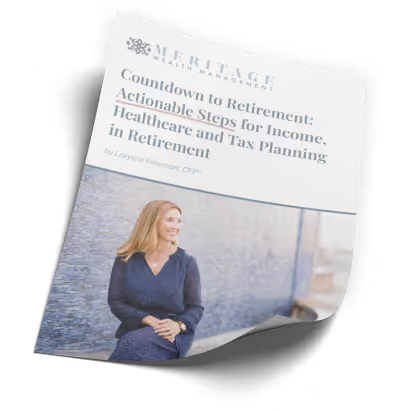
Get The Free Countdown To Retirement Guide!
More Worth Exploring
The Meritage blog covers the topics women approaching retirement are actually thinking about.

